
National Financial Literacy Standards
Effective financial education requires more than quality curriculum and financial knowledge. It requires qualified educators, effective teaching practices, and clear expectations for what learners should be able to accomplish. The National Financial Educators Council (NFEC) developed comprehensive financial literacy standards addressing both sides of the educational process – the professional competencies educators must demonstrate and the practical financial capabilities learners need to succeed.
The NFEC’s National Financial Literacy Standards bring together four complementary resources covering educator qualifications, instructional effectiveness, learner development, and measurable financial outcomes. These standards establish expectations for teaching financial concepts, developing real-world financial capabilities, assessing practical skills, and supporting continued application.
Together, these resources provide a foundation for strengthening educator preparation, improving instructional quality, measuring learner performance, and advancing accountability across the financial education industry. By connecting professional teaching standards with measurable learner outcomes, the NFEC aims to raise the quality and effectiveness of financial education and better prepare individuals for life’s financial responsibilities.
Why Standards for Financial Educators and Learners Matter
The financial education industry has long lacked comprehensive, coordinated standards addressing both educator competence and learner outcomes. Historically, most attention has focused on what students should learn, with far less emphasis on the qualifications, instructional abilities, and accountability of those responsible for teaching them. This gap undermines educational quality, consistency, and effectiveness.
Qualified educators are the foundation of effective financial education. Even the strongest curriculum and learner standards have limited value without instructors capable of developing and measuring applied financial capabilities. The NFEC developed complementary standards to address both sides of the educational process: establishing professional competencies and teaching performance expectations for educators, while defining measurable, real-world capabilities learners should demonstrate. Together, these resources establish a more complete system for advancing financial education quality and accountability.
Standards for Financial Educators
The NFEC developed two complementary resources to establish professional expectations and improve financial education effectiveness. The National Financial Educator Standards℠ define the competencies educators must demonstrate, while the Framework for Teaching Personal Finance℠ provides criteria for evaluating and improving teaching practices.
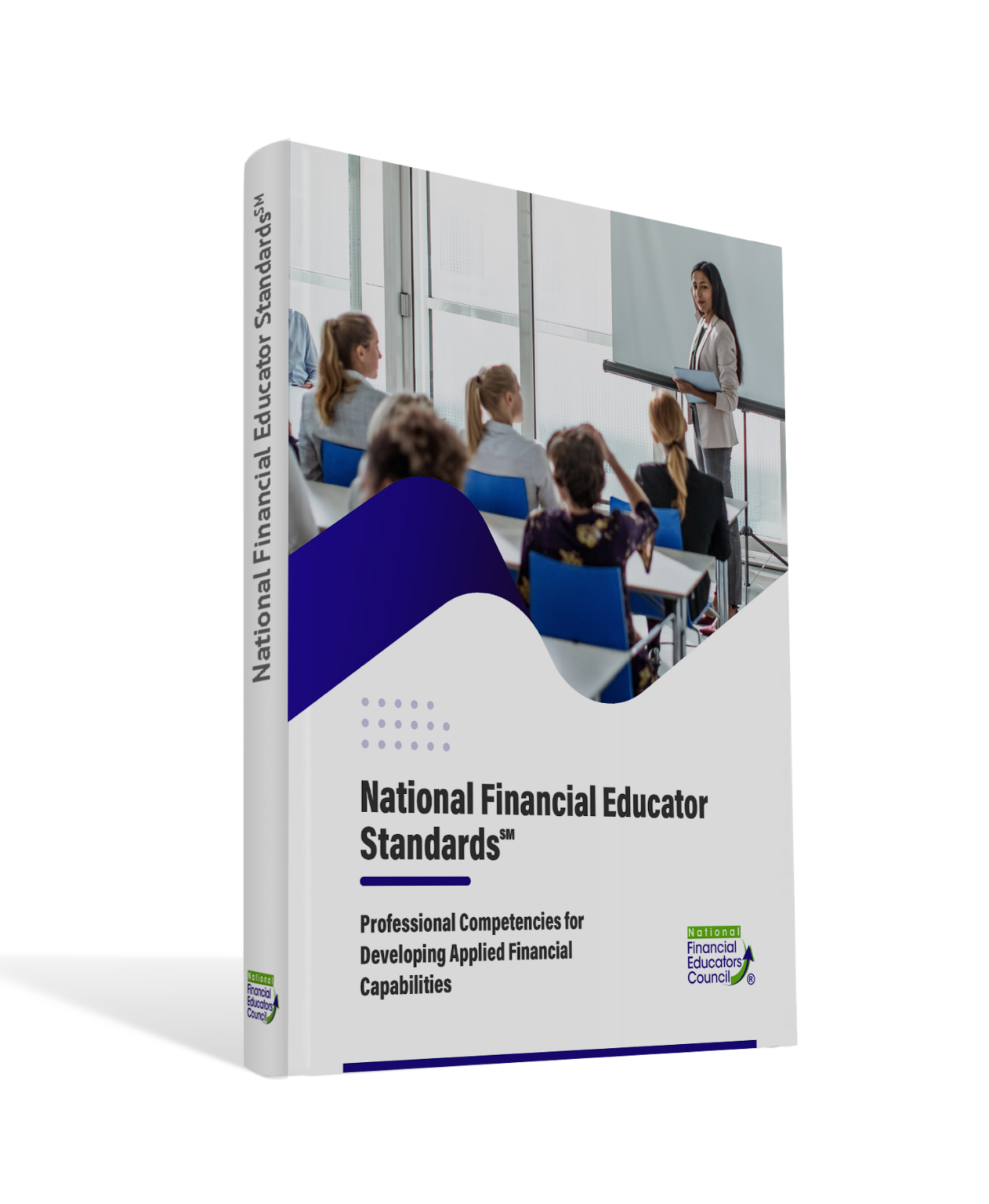
National Financial Educator Standards℠
10 Domains | 56 Professional Standards
The National Financial Educator Standards℠ establish the professional competencies required to deliver effective financial education. They address financial subject-matter proficiency, financial psychology, teaching methods, instructional design and delivery, performance-based assessment, program evaluation, learner privacy, and professional ethics.
The Standards emphasize demonstrated competence over credentials or training completion alone. They provide a foundation for educator preparation, qualification, competency evaluation, professional development, and continuous improvement.
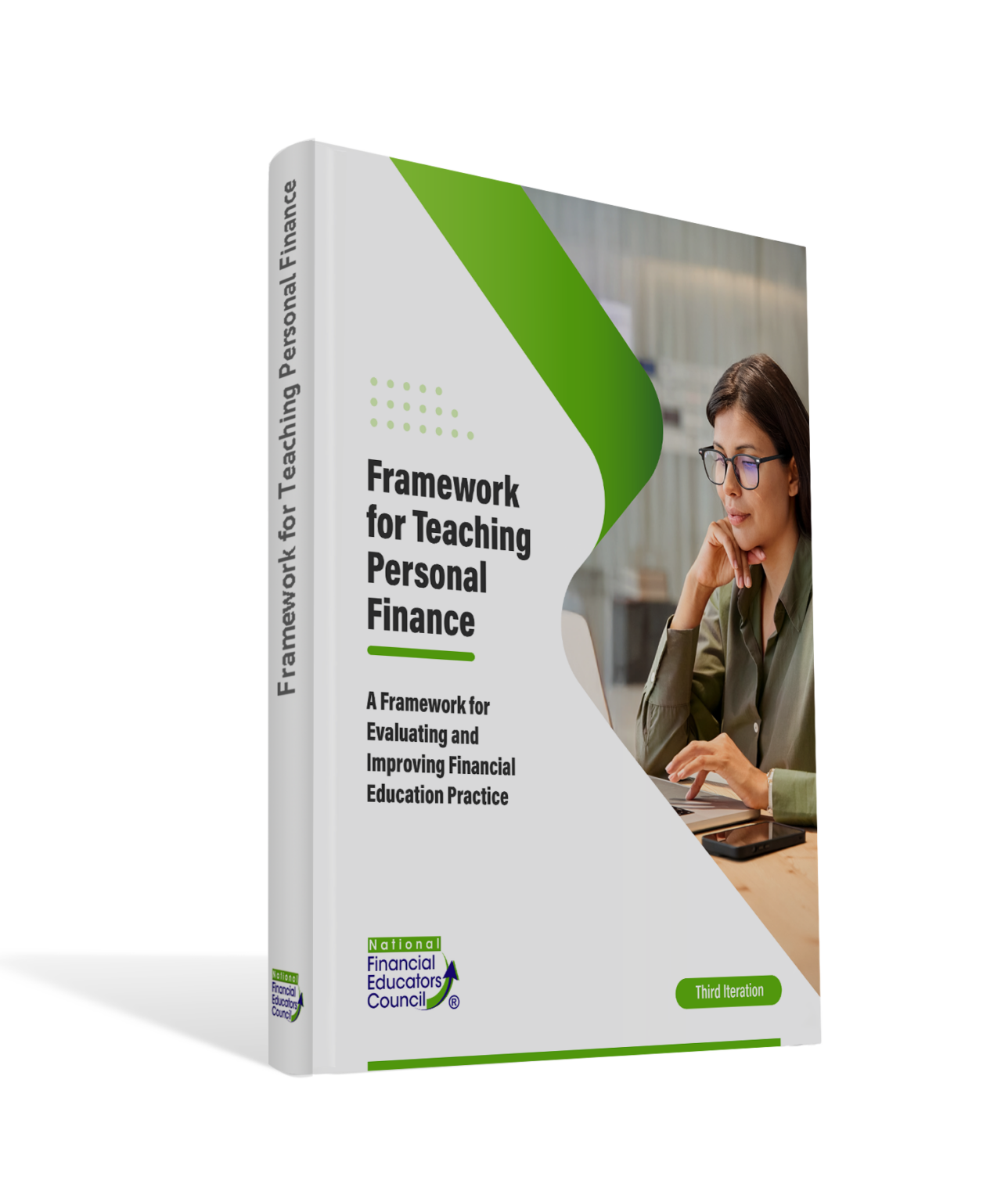
Framework for Teaching Personal Finance℠
4 Domains | 22 Teaching Components | 4 Performance Levels
Developed in collaboration with consultants from the Danielson Group, the Framework for Teaching Personal Finance℠ establishes criteria for evaluating and improving instructional effectiveness.
Its 22 components address Planning and Preparation, Learning Environments, Learning Experiences, and Principled Teaching. Four performance levels – Unsatisfactory, Basic, Proficient, and Distinguished – provide structured criteria for identifying instructional strengths, addressing deficiencies, and guiding professional development.
How the Standards and Framework Work Together
The National Financial Educator Standards define what educators must know and demonstrate, while the Framework evaluates how effectively those capabilities are applied in teaching practice. Together, they help distinguish professional competency gaps from instructional performance weaknesses and provide a coordinated foundation for educator preparation, evaluation, and continuous improvement.
Standards for Learners
Financial education should prepare students to do more than recall financial concepts. The NFEC’s learner standards establish age-appropriate expectations for developing financial capabilities, from foundational money skills in childhood to completing practical tasks and navigating financial responsibilities as students transition into adulthood.
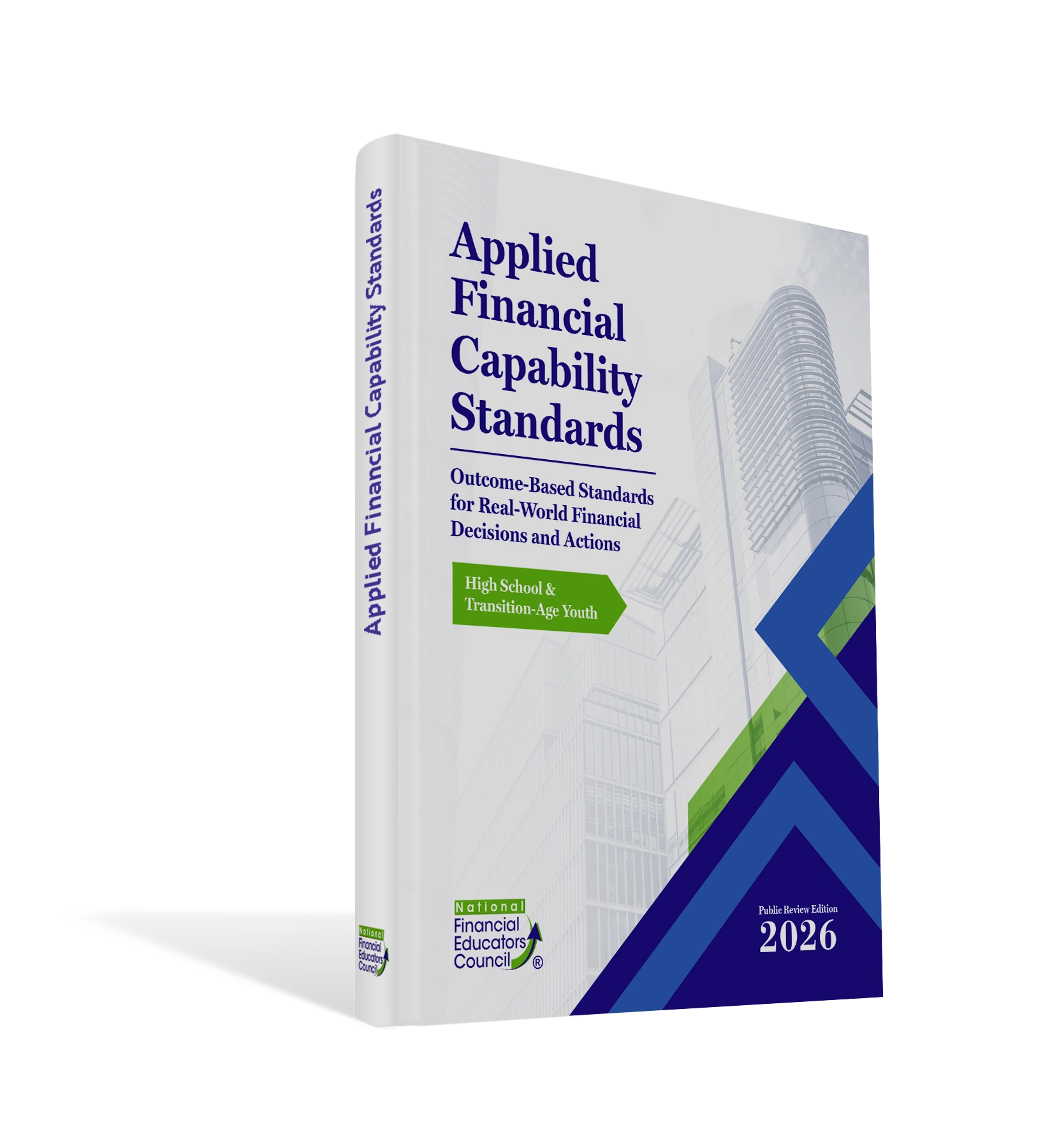
Applied Financial Capability Standards℠
High School Through Transition to Adulthood | 1,400+ Enabling Learning Outcomes
The Applied Financial Capability Standards℠ establish measurable, performance-based expectations for high school students and youth preparing for independent adulthood. Rather than focusing primarily on financial knowledge, these standards emphasize what students can demonstrate, complete, produce, and apply in real-world situations.
Organized around near-term financial responsibilities, the Standards address earning income, employment, banking, budgeting, savings, credit, debt, taxes, transportation, housing, insurance, and other major financial decisions. They establish observable outcomes through completed tasks, practical plans, established systems, and performance-based assessments.
The Standards are undergoing public review to strengthen their rigor, practical relevance, and effectiveness before final publication.
Kids Financial Literacy Standards
Pre-Kindergarten Through 8th Grade | Age Appropriate Standards
The NFEC’s Kids Financial Literacy Standards establish developmentally appropriate learning expectations that help children build foundational financial understanding, decision-making skills, and positive money habits.
The Standards address financial psychology, budgeting, saving, income, entrepreneurship, credit, debt, and risk management. Learning expectations progress with students’ cognitive development, introducing increasingly complex concepts and practical applications as children advance through elementary and middle school.
These standards provide a foundation for preparing younger learners to develop the financial capabilities needed for more consequential decisions later in life.
Standards Development, Accreditation, and Educational Quality
The NFEC’s standards reflect years of development and refinement involving professionals with expertise in financial services, education, instructional design, psychology, and assessment. Developed independently of sponsor influence, the resources prioritize educational effectiveness, learner protection, and measurable financial capability outcomes.
As an IACET Accredited Provider, the NFEC has demonstrated compliance with the ANSI/IACET Standard for Continuing Education and Training. The accreditation process and the expertise of team members involved in educator training, instructional design, assessment, and accreditation compliance have informed ongoing improvements to NFEC’s professional standards and educational programs.
The NFEC’s collaboration with consultants from the Danielson Group also helped establish a foundation for evaluating financial education teaching practices. Successive revisions to the Standards, Framework, and Certified Financial Education Instructor (CFEI®) program have strengthened their alignment, connecting professional competencies, educator training, instructional evaluation, and practical learner outcomes.